
On November 18, 2026 (early November 19 Asia/Shanghai), following the launch of ChatGPT for Sales, OpenAI unveiled ChatGPT for Accounting (openai.com/business/solutions/accounting)—a vertical workflow experience (rather than a new base model release) pairing OpenAI's dedicated Accounting plugin with partner bookkeeping tools and optional Computer Use for apps without direct plugins.
Connected Accounting Tools & Four Bookkeeping Workflows
**Partner Integrations & End-to-End Month-End Preparation: **ChatGPT for Accounting connects with Intuit QuickBooks, Xero, BILL, FreshBooks, NetSuite, QuickStart, Rillet, and Campfire. Across those connected records, emails, and files, teams can generate draft journal entries and customer invoices with suggested account coding (holding unclear or duplicate items for review), gather statements and payment records for bank reconciliation, cross-check workpapers against supporting documents to draft review notes on discrepancies, and save recurring month-end close checklists and templates as reusable skills.
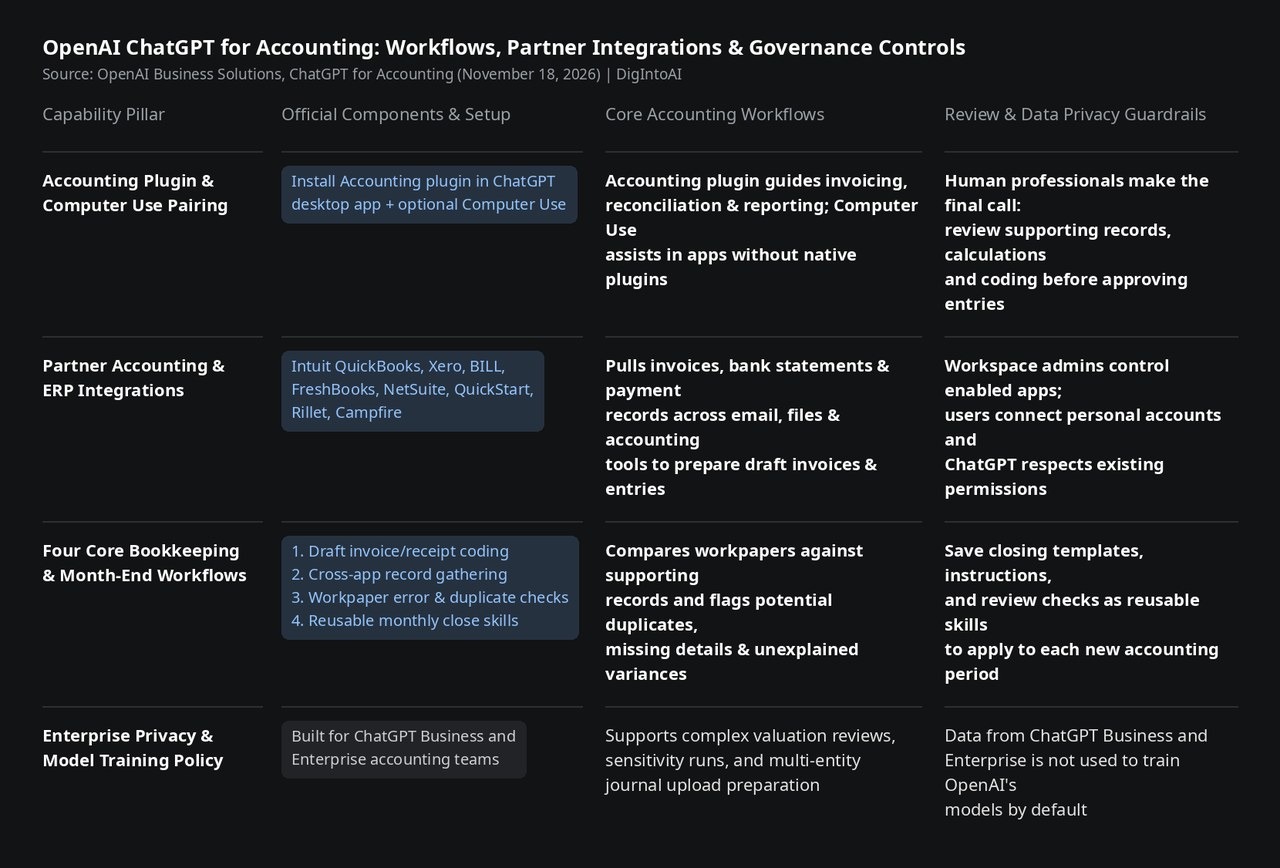
Image source: compiled by DigIntoAI from OpenAI's ChatGPT for Accounting solution page.
Human Sign-Off, Workspace Controls & Data Privacy
**Built-In Governance for Business & Enterprise Teams: **OpenAI emphasizes three operational safeguards: accounting professionals review supporting records, calculations, and coding before approving final entries or reports; workspace admins control which apps are enabled while individual users connect their own accounts under existing permissions; and data from ChatGPT Business and Enterprise is not used to train OpenAI's models by default.